International Short Course 2026 2
About the Course
This International Short Course is designed to introduce participants to Indonesian Islam as a lived tradition through the experiences of women ulama, pesantren communities, and contemporary Islamic scholarship.
Participants will explore how Islamic knowledge is interpreted, negotiated, and translated into social transformation in Indonesia. The programme highlights the intellectual contributions of the Kongres Ulama Perempuan Indonesia (KUPI), a pioneering movement that reaffirms women as legitimate producers of Islamic knowledge through collective ijtihad, ethical reasoning, and commitments to justice, compassion, and human dignity.
Indonesia offers one of the world's richest contexts for understanding the dynamic relationship between religion, culture, and society. As the world's largest Muslim-majority country, its Islamic traditions have developed through continuous interaction among religious scholarship, local cultures, pesantren, civil society, and democratic institutions. This diversity has produced distinctive forms of religious authority that demonstrate how Islamic teachings can respond constructively to contemporary challenges while remaining rooted in classical intellectual traditions.
A central focus of the programme is the emergence of the Kongres Ulama Perempuan Indonesia (KUPI) as an innovative movement of Islamic scholarship. Beyond promoting women's participation, KUPI offers a distinctive epistemological framework that integrates classical Islamic scholarship with lived experiences, maqāṣid al-sharī'ah, collective deliberation, and ethical commitments to justice and human dignity. Through this perspective, participants are invited to examine what Islamic texts say and how religious knowledge is produced, who participates in its interpretation, and how Islamic ethics can contribute to addressing contemporary social issues.
The course presents knowledge as a collaborative process shaped through dialogue between scripture, scholarly traditions, lived experiences, and contemporary social realities. Participants will critically examine how ethical reasoning, collective deliberation, and contextual interpretation contribute to addressing global issues such as gender justice, peacebuilding, environmental sustainability, and social inclusion.
A distinctive feature of this programme is the live-in experience at Pesantren Kebon Jambu, one of Indonesia's leading pesantren in promoting women's religious leadership and gender justice. Participants will live alongside the santri, taking part in the rhythms of daily pesantren life, including religious learning, communal activities, and interactions with women ulama and community leaders. This immersive experience enables participants to gain first-hand insight into how pesantren education cultivates religious scholarship, ethical leadership, and community engagement.
Through this community immersion, participants will explore how the pesantren serves as an institution of Islamic learning and as a social space where ideas of justice, compassion, and gender equality are nurtured and translated into everyday practice. By experiencing the educational environment from within, participants will better understand how Pesantren and the KUPI movement have contributed to the development of women ulama and to broader efforts to advance gender justice in contemporary Indonesian Muslim society.
Why Join?
Discover an immersive learning experience that connects Islamic scholarship, culture, and contemporary social issues.
Learn from Women Ulama
Learn directly from Indonesia's leading women ulama and gain insight into their intellectual and social contributions.
Explore KUPI's Methodology
Explore KUPI's internationally recognised methodology in developing contextual and ethical Islamic scholarship.
Experience Pesantren Life
Experience life in a pesantren and take part in its daily learning, communal activities, and religious traditions.
Visit Indonesia's Largest Mosque
Visit Indonesia's largest mosque and experience an important part of the country's contemporary Islamic landscape.
Meet Scholars & Researchers
Engage with leading scholars and researchers through meaningful academic discussions and exchanges.
Discover Cirebon
Discover the Islamic culture, heritage, and traditions of Cirebon through direct cultural experiences.
Build Global Connections
Build friendships and meaningful connections with participants from around the world.
Who Can Apply?
The programme welcomes participants from diverse academic and professional backgrounds who are interested in Islamic scholarship, gender justice, social transformation, and contemporary Muslim societies.
Important Dates
| Application Opens | : August 1, 2026 |
|---|---|
| Application Deadline | : September 10, 2026 |
| LOA | : September 20, 2026 |
| Course | : November 2-9, 2026 |
Tema
- A. Islam dan Transformasi Media Digital
- Dakwah digital dan komunikasi keagamaan di media sosial
- Influencer Muslim dan ekonomi keagamaan digital
- Produksi pengetahuan Islam di platform online
- Algoritma, visibilitas, dan sirkulasi konten keagamaan
- B. Media, Politik, dan Demokrasi di Dunia Muslim
- Media digital dan partisipasi politik
- Gerakan sosial dan aktivisme daring di masyarakat Muslim
- Disinformasi, propaganda, dan politik identitas
- Disinformasi, propaganda, dan politik identitas
- C. Identitas Muslim di ranah digital global
- Representasi umat Muslim di media global
- Islamofobia dan narasi tandingan digital
- Diaspora Muslim dan jaringan digital transnasional
- Budaya populer dan gaya hidup digital Muslim
- D. Otoritas Keagamaan dan Pengetahuan Islam di Era Digital
- Transformasi otoritas keagamaan di lingkungan Online
- Fatwa daring dan konsultasi keagamaan digital
- Ulama, cendekiawan, dan intelektual publik di ruang digital
- Platform digital dan ijtihad kontemporer
- E. Etika, Media, dan Nilai-Nilai Islam dalam Komunikasi Digital
- Perspektif Islam tentang etika komunikasi digital
- Disinformasi, ujaran kebencian, dan literasi media
- Tanggung jawab moral dalam komunitas Muslim Online
- Kerangka kerja etika untuk keterlibatan digital Islami
- F. Ekonomi Digital dan Industri Kreatif Muslim
- Ekonomi digital halal
- Startup media Muslim dan kewirausahaan
- Industri kreatif dan branding Islami
- Monetisasi Konten Islami di Platform Digital
- G. Pendidikan Islam dan Literasi Digital
- Transformasi digital pendidikan Islam
- Inisiatif e-learning dan madrasah online
- Literasi digital dalam masyarakat Muslim
- Kecerdasan buatan dan masa depan studi Islam
- H. Budaya, Seni, dan Ekspresi Islam dalam Media Baru
- Estetika Islam dalam budaya visual digital
- Film, musik, dan budaya populer Muslim kontemporer
- Penceritaan digital dan narasi Islam
- Permainan, animasi, dan produksi budaya Islam
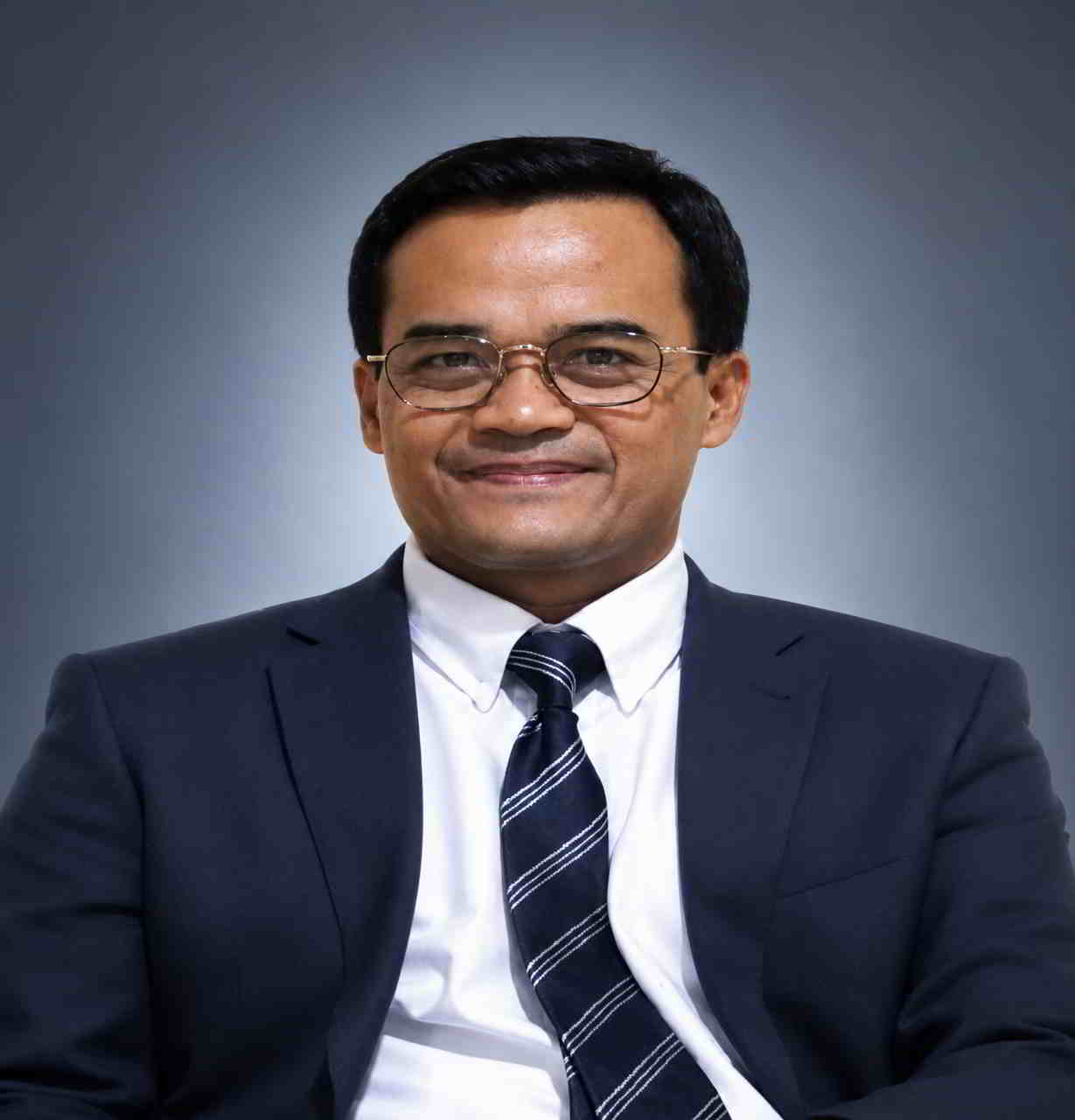
Prof. Dr. Gun Gun Heriyanto, M.Si
Dekan Fakultas Dakwah dan Ilmu Komunikas UIN Syarif Hidaytullah JakartaOpening Speech
AICIMIDS 2026